When I first mentioned to my contractor that I wanted cork flooring in my bathroom renovation, he looked at me like I’d suggested carpeting the shower. I get it, cork and water don’t seem like natural companions. But after living with cork bathroom floors for over three years now, I can honestly say it was one of the best decisions I made during our whole house remodel. The journey from skeptical homeowner to cork flooring advocate taught me that sometimes the unconventional choice is exactly the right one. I’ve dealt with the challenges, enjoyed the benefits, and learned plenty of lessons I wish someone had shared with me before I started.
My interest in cork flooring started during a trip to Portugal, where I stayed in a boutique hotel that had cork floors throughout, including the bathrooms. I was immediately struck by how warm and comfortable it felt underfoot, especially on cool mornings. Unlike the cold shock of tile, cork had this soft, cushioned quality that made every step pleasant. I started researching as soon as I got home and discovered that cork is naturally antimicrobial, water-resistant when properly sealed, and sustainably harvested without harming trees. The more I learned, the more convinced I became that this could work in my own bathroom. I loved the idea of something different from the standard tile everyone else had.
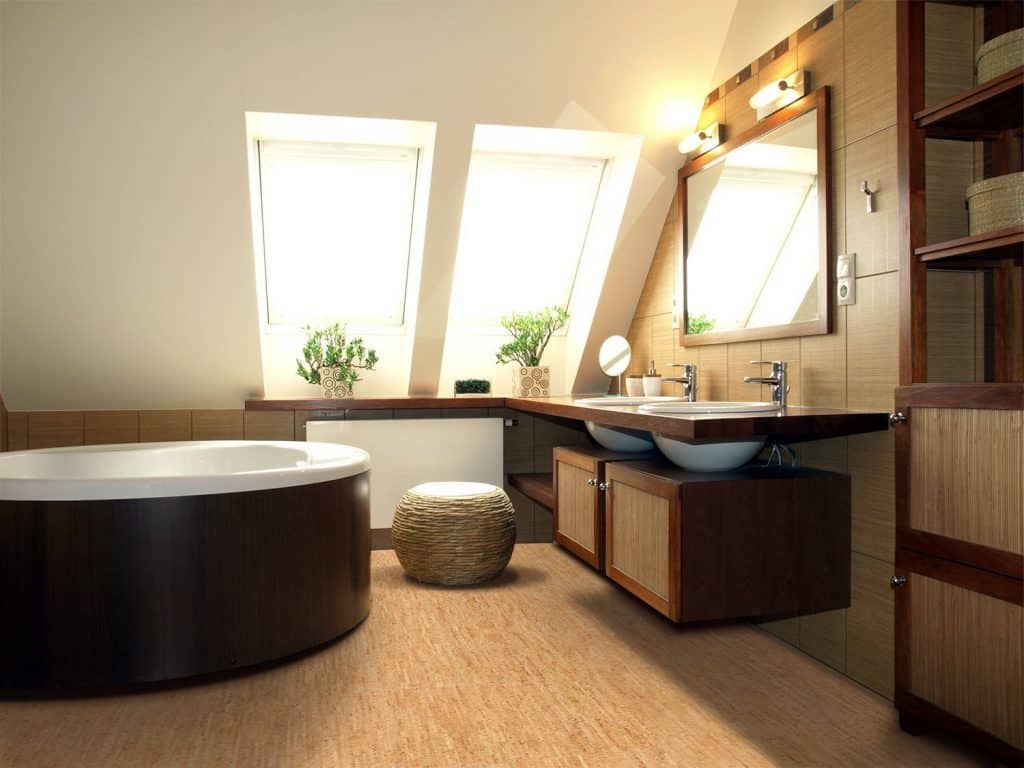
The selection process was more complicated than I anticipated. Not all cork flooring is created equal, and this is especially true when you’re using it in a moisture-prone area like a bathroom. I learned that you need cork specifically rated for bathroom use, with multiple layers of sealant already applied by the manufacturer. I looked at floating cork floors, glue-down tiles, and click-lock planks. After consulting with several flooring specialists, I went with glue-down cork tiles because they create a completely sealed surface when installed correctly. The tiles I chose had six coats of polyurethane finish and were twelve inches square with a beautiful natural grain pattern that added texture without being too busy.
Installation required finding the right professional because not every flooring installer has experience with cork in wet areas. I interviewed four different contractors before finding one who had done multiple cork bathroom installations and could show me photos of his previous work. He emphasized the importance of proper subfloor preparation, using the right adhesive, and sealing all seams meticulously. The installation took three days for my modest-sized bathroom, much longer than tile would have taken. He had to let the adhesive cure properly between steps and apply additional sealant around the toilet, tub, and sink areas. Watching the process made me grateful I hadn’t attempted this as a DIY project.

The comfort factor has exceeded my expectations in ways I didn’t even anticipate. Cork has natural insulating properties, so the floor stays relatively warm even in winter. I no longer dread stepping out of the shower onto a freezing surface. The slight give in cork flooring also makes it easier on my joints, which I especially appreciate during my morning routine. My elderly mother, who visits frequently, comments every time about how much she loves the bathroom floor because it’s gentle on her knees and feet. There’s also a sound-dampening quality to cork that makes the bathroom feel quieter and more spa-like. These comfort benefits have genuinely improved my daily experience in ways I use but don’t often think about.
Moisture management has been the learning curve I expected. Cork itself is water-resistant because of its cellular structure, but it’s not waterproof. The key is maintaining the protective sealant layer that keeps water from penetrating. I wipe up standing water promptly rather than letting it sit, and I use bath mats strategically near the tub and sink. Every six months, I apply a fresh coat of water-based polyurethane sealant, which takes about an hour and keeps the floor protected. In three years, I haven’t had any issues with water damage, swelling, or mold. However, I’m diligent about maintenance. If you’re someone who lets water pool on the floor regularly, cork probably isn’t your best choice.

The aesthetic has been a conversation starter with every guest who uses our bathroom. The natural warmth of cork creates a organic, spa-like feeling that’s hard to achieve with traditional bathroom materials. The honey-toned color works beautifully with our white fixtures and sage green walls, creating a calm, earthy atmosphere. Cork has natural variation in its grain pattern, so each tile is slightly different, which adds visual interest without being overwhelming. I’ve seen cork floors in lighter and darker shades depending on the finish, and they all have this inherent warmth that makes a bathroom feel more inviting. It’s definitely different from what most people expect in a bathroom, which I personally love.
Maintenance has settled into a simple routine that doesn’t feel burdensome. I sweep or vacuum regularly to prevent dirt from scratching the finish, and I damp mop weekly with a pH-neutral cleaner specifically made for cork floors. I avoid harsh chemicals, excessive water, and abrasive scrubbing pads. The twice-yearly resealing is the most involved task, but it’s straightforward and doesn’t require professional help. I’ve noticed a few small scratches over the years from dropped items, but they’re barely visible and add character rather than looking damaged. The floor has held up remarkably well considering it’s in a high-moisture environment. It still looks nearly as good as the day it was installed.
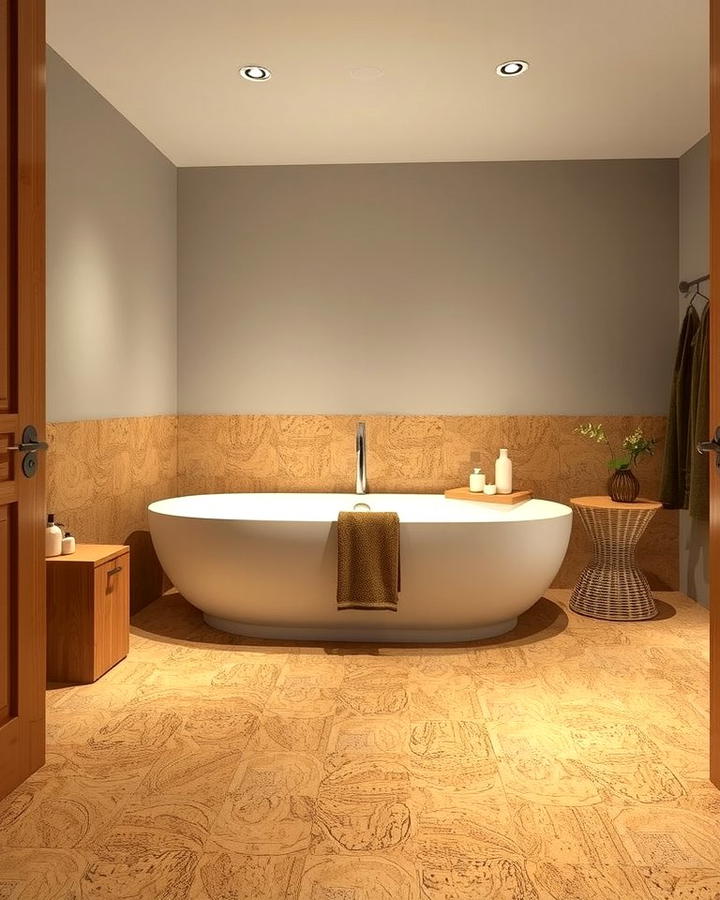
The durability has pleasantly surprised me because I worried cork would be too soft for a bathroom. While cork is softer than tile or hardwood, it’s also resilient and bounces back from compression. Heavy furniture or standing water are enemies of cork, but normal bathroom use hasn’t caused problems. The cellular structure of cork makes it naturally resistant to dents, and minor imperfections tend to fill back in over time. I’ve had no issues with the finish wearing through in high-traffic areas, which I attribute to quality materials and proper maintenance. Cork does require more attention than tile, but it’s proven more durable than I initially gave it credit for, especially considering the comfort benefits it provides.
Three years in, I have zero regrets about choosing cork flooring for my bathroom. It’s transformed a purely functional space into somewhere I actually enjoy spending time. The initial investment was higher than tile would have been, roughly forty percent more when you factor in materials and specialized installation, but the comfort and unique aesthetic have been worth every penny. Would I do it again? Absolutely. Would I recommend it to everyone? No, and that’s okay. Cork bathroom floors are for people who value comfort and uniqueness, who don’t mind a bit of extra maintenance, and who can commit to proper care. If that sounds like you, I encourage you to seriously consider cork. It might just surprise you as much as it surprised me.

Is cork flooring really waterproof enough for bathroom use?
Cork itself is naturally water-resistant due to its cellular structure, but it’s not waterproof in the absolute sense. The key is the sealant. Properly sealed cork flooring with multiple layers of polyurethane can absolutely handle bathroom moisture when maintained correctly. I’ve had mine for three years with no water damage. The important thing is wiping up standing water rather than letting it sit, using bath mats in splash zones, and resealing every six months. If you’re diligent about these things, cork performs beautifully. If you tend to flood your bathroom regularly or don’t maintain it, stick with tile.
How does cork flooring feel compared to tile in a bathroom?
The difference is dramatic and honestly one of my favorite things about cork. Tile is cold and hard, especially on winter mornings. Cork stays relatively warm because of its insulating properties and has a slight cushioning effect that’s gentle on feet and joints. It’s not squishy like vinyl, but there’s definitely some give that makes standing more comfortable. Guests always comment on how nice it feels. The warmth factor alone makes getting out of the shower much more pleasant. If you’ve ever wished your bathroom floor weren’t so harsh and cold, cork completely solves that problem.
What’s involved in maintaining cork bathroom floors?
My routine is pretty simple. I sweep or vacuum several times a week to remove dirt and debris that could scratch the finish. Once a week, I damp mop using a cork floor cleaner diluted in water, making sure not to use excessive moisture. Every six months, I apply a fresh coat of water-based polyurethane sealant after thoroughly cleaning the floor. This takes about an hour and keeps the protective layer intact. I also wipe up spills and standing water promptly. It’s more maintenance than tile, but not drastically so. The key is consistency rather than intensity.
How much does cork bathroom flooring typically cost?
My cork tiles cost about seven dollars per square foot, which was mid-range quality. I’ve seen cork bathroom flooring range from five to twelve dollars per square foot, depending on quality and finish layers. Installation added another four dollars per square foot because I needed someone experienced with cork in wet areas. My 60-square-foot bathroom cost roughly six hundred fifty dollars total. That’s about forty percent more than decent tile would have cost. You can find cheaper cork, but for bathrooms, I recommend investing in properly sealed, high-quality tiles. The difference in durability is worth the extra cost upfront.

Can cork flooring handle humidity from showers and baths?
Yes, when properly sealed and maintained. My bathroom gets steamy from daily showers, and the cork has handled it without any issues. The multiple layers of polyurethane sealant prevent moisture from penetrating the cork itself. I do run the exhaust fan during and after showers to manage overall humidity, which is a good practice regardless of flooring type. The cork hasn’t swelled, warped, or developed mold in three years. The key factors are quality materials rated for bathroom use, proper installation with sealed seams, and maintaining the protective finish. Normal bathroom humidity is fine; it’s standing water you need to manage.
Will cork flooring hold up in a high-traffic family bathroom?
Mine is in our main bathroom that gets used by our family of four multiple times daily, and it’s held up remarkably well. Cork is softer than tile, so you need to be reasonable about expectations. I’ve gotten a few small scratches from dropped items, but they’re barely noticeable and the floor overall still looks great. The finish hasn’t worn through in high-traffic areas. Kids can be tough on floors, but cork’s resilient cellular structure actually bounces back from compression better than you’d expect. I wouldn’t put it in a bathroom used by a dozen teenagers, but for normal family use with proper care, it’s proven quite durable.

Cork Flooring: Bathroom The options for cork flooring

Related Posts: