When I first considered epoxy flooring for our office renovation three years ago, I honestly didn’t know much beyond what I’d seen in industrial warehouses. The old carpet in our workspace was stained, harbored allergens, and looked tired, no matter how often we cleaned it. A colleague mentioned epoxy as an alternative, and I started researching. What I discovered completely changed my perspective on office design. Epoxy wasn’t just practical; it offered a clean, modern aesthetic that could transform our entire work environment while solving real functionality problems we’d been dealing with for years.
The decision-making process taught me that not all epoxy systems are created equal, especially for office environments. I spent weeks comparing options and quickly learned the difference between basic epoxy paint and professional-grade systems. The paint products you find at hardware stores are thin coatings that wear quickly under office chair traffic and foot traffic. Professional epoxy systems, which I ultimately chose, involve multiple layers, including a primer, base coat, and topcoat that together create a thick, durable surface. I consulted with three different contractors before finding one who understood that office spaces need specific performance characteristics different from garages or warehouses.
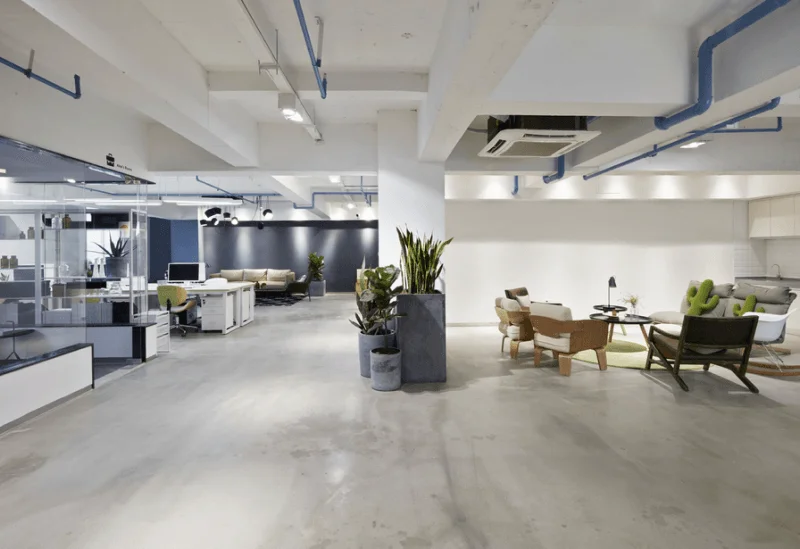
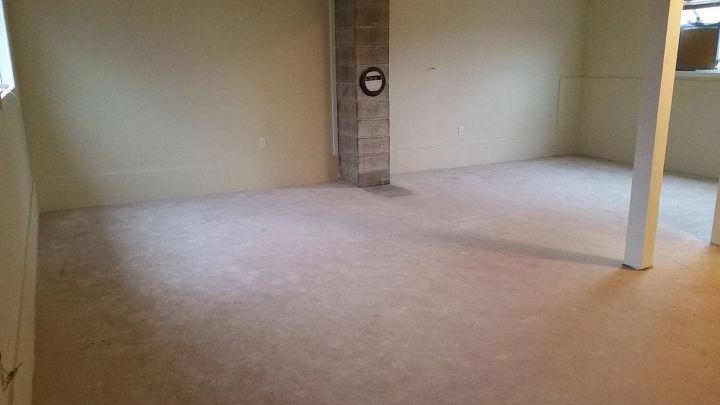
Preparing our office for epoxy installation was more involved than I anticipated, but absolutely necessary for long-term success. We had to empty the space, which meant coordinating a week of remote work for the entire team. The concrete substrate needed grinding to open the pores and ensure proper adhesion. I watched the crew remove all the old carpet adhesive, repair cracks, and level uneven areas. They explained that moisture testing was critical, since our office is on the ground floor. Any trapped moisture could cause the epoxy to bubble or delaminate later. This preparation phase took two full days, longer than the actual epoxy application.
Choosing the right color and finish for our office epoxy became a surprisingly creative process. I initially assumed we’d go with standard gray, but my contractor showed me samples in soft neutrals, light taupes, and even subtle metallic finishes. We ultimately selected a warm gray base with small decorative flakes in cream and charcoal tones. The flakes serve a practical purpose beyond aesthetics; they hide minor dirt and add slip resistance. For the finish, I chose a satin topcoat rather than high gloss. The satin provides enough reflectivity to brighten the space and make it feel larger, but doesn’t create the glare or bowling alley appearance that high gloss can produce in an office setting.

The installation week tested my patience but proved worthwhile. The chemical smell during application was strong, so we sealed off the space and ensured proper ventilation. The crew applied the primer coat on day one, the pigmented base coat on day two, broadcast the decorative flakes on day three, and applied two topcoat layers on days four and five. Each layer required a specific curing time before the next could be applied. Temperature and humidity had to be controlled carefully, which meant running our HVAC system continuously. I learned that rushing epoxy installation causes problems, so we gave it an extra three days beyond the recommended cure time before moving furniture back in.
Living with epoxy flooring in our office has exceeded my expectations in terms of maintenance and durability. Daily cleaning involves nothing more than dust mopping or using a microfiber pad. For deeper cleaning, I use a neutral pH cleaner and water, never harsh chemicals that could dull the finish. Spilled coffee, dropped food, even the occasional ink from a leaking pen, everything wipes up easily without staining. The surface has held up remarkably well under rolling office chairs, constant foot traffic, and even the occasional dropped equipment. After three years, it still looks nearly as good as on installation day, something I could never say about our old carpet after three months.

The impact on our office environment went beyond just aesthetics and maintenance. The epoxy flooring dramatically improved our indoor air quality because it doesn’t trap dust, allergens, or odors like carpet does. Several team members with allergies noticed immediate improvement. The seamless surface also makes the space feel more open and cohesive. We can easily reconfigure workstations without worrying about mismatched carpet squares or exposed concrete. The light reflectivity reduced our need for artificial lighting near windows. I hadn’t anticipated these benefits, but they’ve genuinely improved our daily work experience and even reduced some operational costs.
One challenge I faced was managing expectations about epoxy’s limitations. It’s not completely indestructible, despite what some marketing materials suggest. Sharp, heavy objects dropped directly on the surface can chip it. Dragging metal furniture without protective pads will scratch it. Chemical spills, particularly from strong solvents, need immediate cleanup. I’ve learned to use furniture coasters under desk legs and chair mats in high-wear areas, though honestly the mats are more about prolonging perfection than necessity. The floor is incredibly durable, but treating it with basic care ensures it maintains its appearance for many years.

The cost consideration was significant but justified when I calculated long-term value. Our professional epoxy installation cost about three times more per square foot than quality commercial carpet would have cost. However, I don’t expect to replace or significantly maintain this floor for at least fifteen to twenty years, whereas carpet would need replacement every five to seven years in our high-traffic office. When I factored in the reduced cleaning costs, no need for periodic deep cleaning or shampooing, and the eliminated replacement cycles, the epoxy actually costs less over a ten-year period. It’s a perfect example of investing more upfront for better long-term value.
Reflecting on this decision three years later, I would absolutely choose epoxy flooring again for our office space. It has proven practical, beautiful, and surprisingly versatile as our needs have changed. When we added a small kitchenette area, the waterproof flooring made that transition easy. When we reconfigured the layout for better collaboration spaces, we simply moved furniture without any flooring concerns. The clean, professional appearance impresses clients who visit our office. Most importantly, it has eliminated the ongoing flooring headaches I used to deal with, freeing me to focus on actually running the business rather than managing carpet stains and replacement schedules.
How long does office epoxy flooring actually last with daily use?
In my experience, professional-grade epoxy flooring in an office setting lasts fifteen to twenty years with proper care, sometimes longer. The key is having a quality installation with adequate thickness. Our floor is three years old and shows minimal wear despite constant rolling chairs and foot traffic. I’ve visited offices with ten-year-old epoxy that still looks great. The topcoat may need refreshing after a decade in extremely high-traffic areas, but the base system remains intact. This longevity far exceeds carpet or vinyl tile options we considered.
What’s the realistic cost range for professional office epoxy installation?
Based on quotes I received, expect to pay between eight and fifteen dollars per square foot for quality office epoxy, depending on your location and chosen finish. Our 2,000 square foot office costs about twelve dollars per square foot, totaling $24,000. That included surface preparation, a three-layer system, decorative flakes, and a satin topcoat. Basic systems run cheaper but don’t perform as well. Decorative options like metallics cost more. This seems expensive until you calculate that quality commercial carpet costs four to six dollars per square foot, but needs replacing every five to seven years.

Can epoxy flooring work in offices with lots of natural light without showing every footprint?
This was a major concern of mine, but the decorative flakes solved it beautifully. Solid color epoxy, especially in dark colors with high gloss, absolutely shows footprints and dust. That’s why I chose a light base color with multicolored flakes and a satin finish rather than gloss. The flakes create a visual texture that camouflages minor dirt and footprints. We dust mop every morning, but the floor looks presentable even if we skip a day. Avoid high-gloss finishes in offices; the satin or matte finishes are much more forgiving and practical for daily use.
How disruptive is the installation process for a functioning office?
I won’t sugarcoat it, installation requires complete space evacuation for about a week, plus additional cure time. We coordinated remote work for our team, which worked well. The chemical odor during application is strong and requires proper ventilation, so you cannot occupy the space. Plan for seven to ten days from start to when you can move furniture back, then another few days before full use. The disruption is significant but temporary. We scheduled installation during a slow period, which minimized business impact. Proper planning makes this manageable; just don’t expect to work in the space during installation.

Does office epoxy flooring get slippery, especially when wet?
The satin topcoat we chose has enough texture to provide good traction when dry, and I specified slip-resistant additives for areas near our kitchenette where water might be present. The decorative flakes also add texture. In normal dry conditions, the floor isn’t slippery at all. I’ve never had anyone slip or feel unsafe walking on it. However, high-gloss finishes without texture additives can be slippery when wet, which is why I specifically avoided that option. Discuss slip resistance with your contractor, especially if your office has areas prone to moisture or spills.
What happens if the epoxy gets damaged? Can you repair sections without redoing everything?
Small chips and scratches can be touched up, though matching the exact color and texture takes skill. I had a contractor repair a chip where someone dropped a metal file cabinet corner. He ground out the damaged area, filled it with matching epoxy, and recoated that section. You can see it if you know where to look, but most people don’t notice. Major damage might require grinding down and recoating larger sections. This is why choosing an experienced contractor matters, they understand proper substrate preparation that prevents most damage issues in the first place.

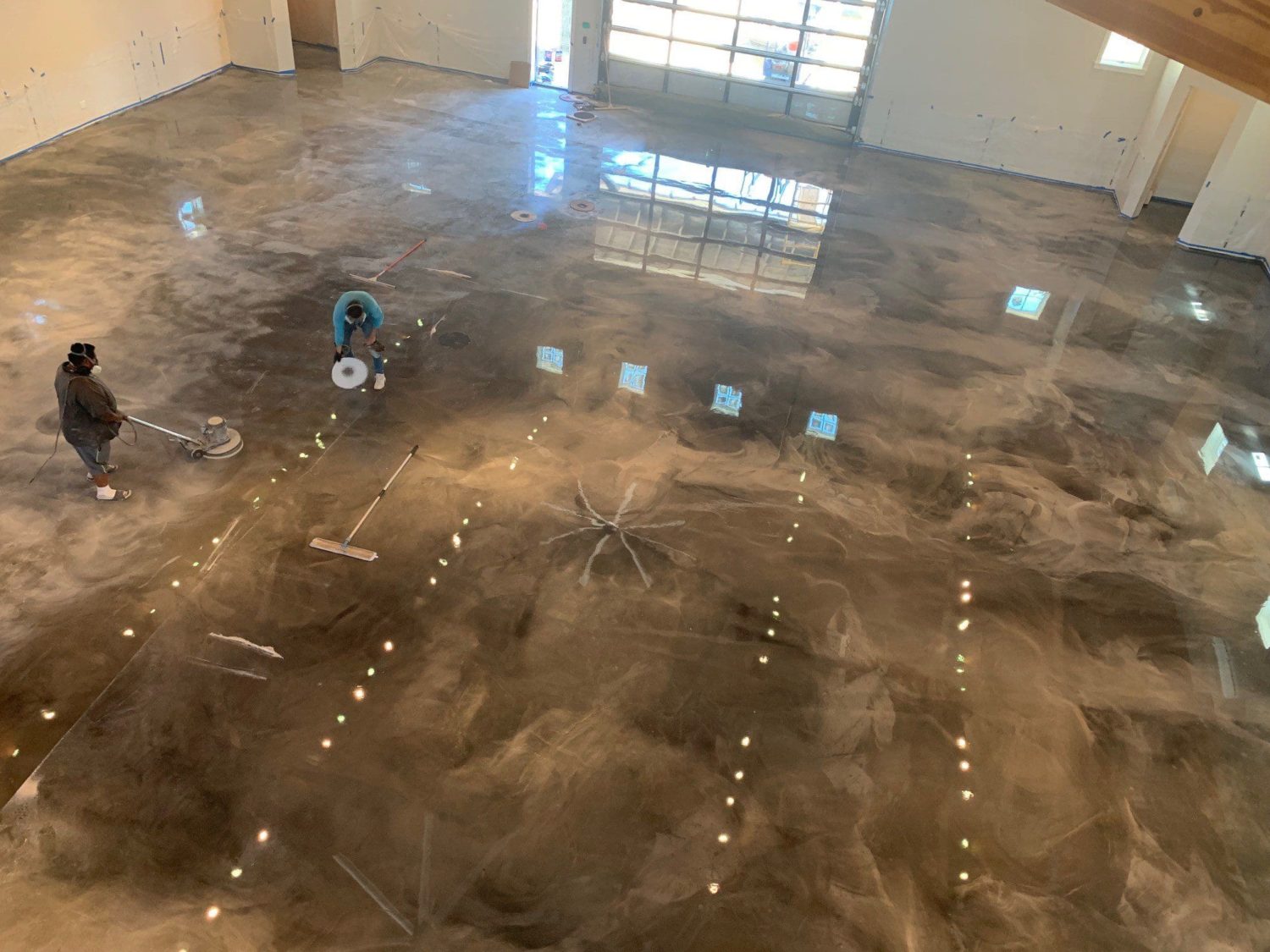
Metallic Epoxy Floor-Dripping Springs – AllStar Concrete
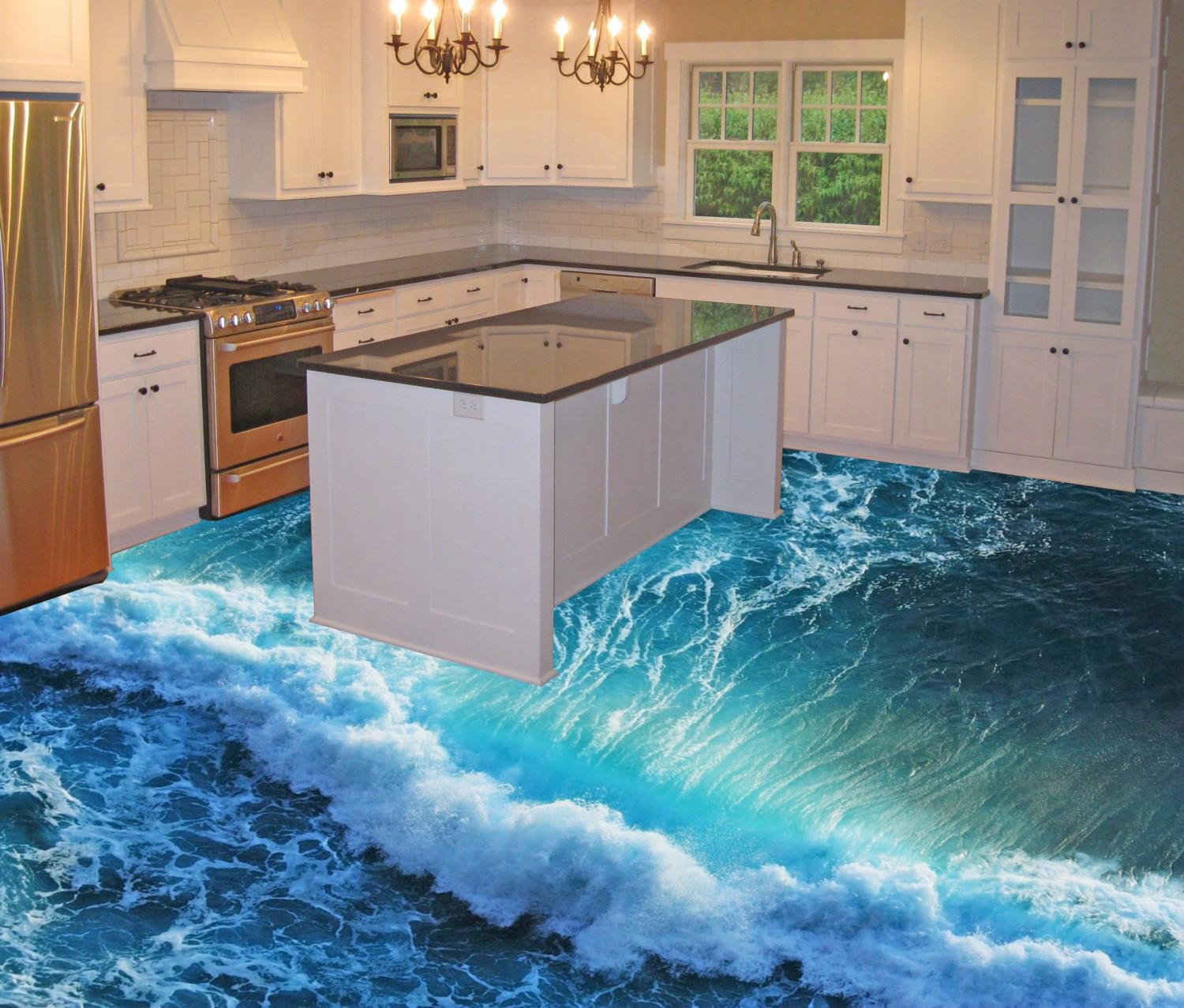
These Incredible 3D Epoxy Floors Will Turn Your Room Into a Beach, Canyon, or Grassy Pathway
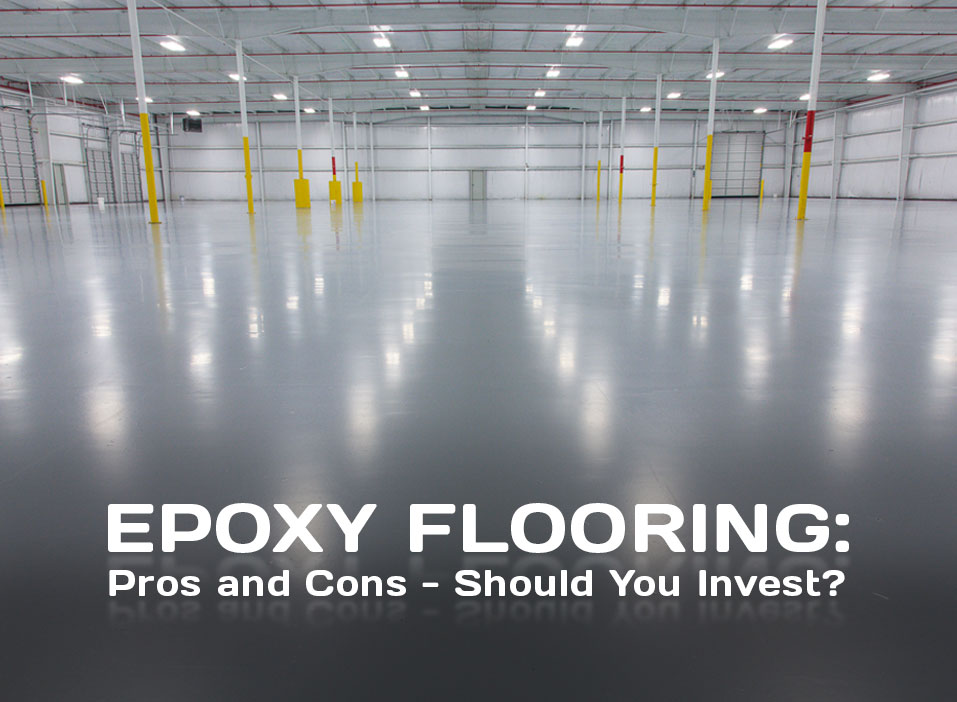
Epoxy Flooring: Pros and Cons – Should You Invest?
Designer Epoxy Home Office Floor Hometalk
Related Posts: