When I first walked into our 1930s farmhouse kitchen, the avocado green linoleum from the 1970s renovation nearly sent me running back to the real estate agent. But underneath that dated disaster, I could envision wide plank hardwood or perhaps the classic farmhouse aesthetic I’d been dreaming about for years. After months of Pinterest browsing and showroom visits, I settled on ceramic tile that mimics reclaimed wood planks, a decision that has proven perfect for our busy family kitchen. The transformation from that green eyesore to a warm, welcoming space that anchors our entire home took six months of planning and three intensive weeks of installation.
My tile selection process involved more research than I anticipated, especially balancing authentic farmhouse aesthetics with practical family needs. I wanted the warmth and character of reclaimed wood but needed something that could handle spills, muddy boots, and the general chaos that comes with three teenagers and two dogs. Wood-look ceramic tile emerged as the perfect compromise, offering the visual appeal of weathered barn wood with the durability and water resistance essential for kitchen use. I spent hours comparing samples in different lights and times of day to ensure the color and texture would work with my white shiplap walls and vintage-style fixtures.

The layout planning phase taught me that tile placement dramatically affects the entire room’s visual flow and proportions. I initially planned traditional brick pattern installation, but my tile contractor suggested running the planks parallel to the longest wall to make the narrow galley kitchen appear wider. We also decided to install the tile throughout the adjacent mudroom for visual continuity, which required careful measurement to ensure the plank lines aligned perfectly between rooms. These layout decisions proved crucial for achieving the seamless, authentic farmhouse look I was after.
Preparation day revealed why professional installation often costs more than expected. Our subfloor required reinforcement in several areas to prevent future tile cracking, and the old linoleum removal uncovered adhesive residue that needed aggressive scraping and chemical treatment. The contractors also discovered slight variations in floor level that required self-leveling compound to create the perfectly flat surface necessary for large format tile installation. This preparation work added two days to the timeline but ensured a professional result that would last for decades.
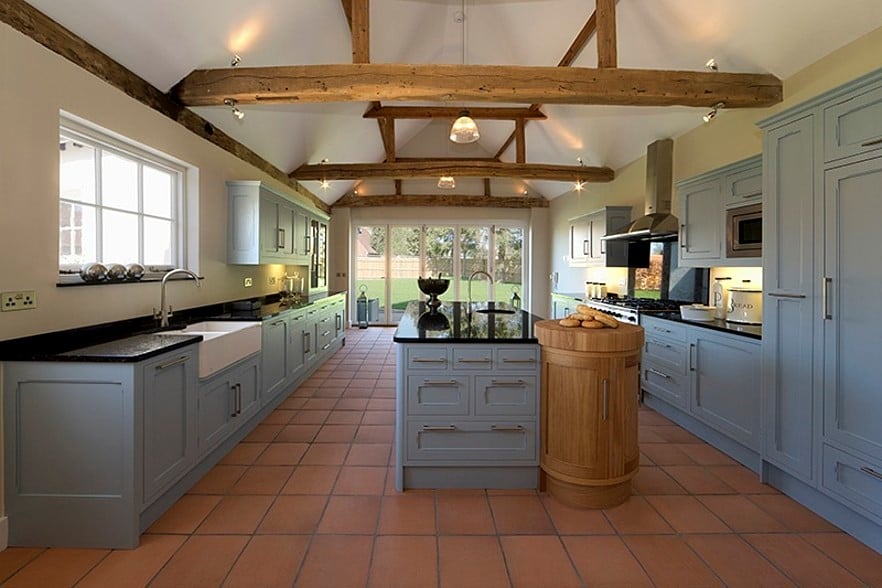
The installation process fascinated me as I watched skilled craftsmen transform my vision into reality. Each tile required careful placement to maintain consistent grout lines and natural variation in the wood grain patterns. The installers used spacers and string lines to ensure perfectly straight rows, but also randomly selected tiles from different boxes to avoid repetitive patterns that would look obviously artificial. The adhesive working time meant sections had to be completed efficiently while still allowing adjustments for perfect alignment.
Grout selection proved more critical than I initially understood for achieving authentic farmhouse character. I chose a warm gray grout that complements the tile without creating harsh contrast lines that would emphasize the artificial nature of ceramic. The slightly wider grout lines, at 3/16 inch instead of standard 1/8 inch, better mimic the gaps between real wood planks while providing easier maintenance access. This subtle detail makes a significant difference in the overall authenticity of the finished floor.

The first week after installation required adjusting our family routines around the curing process and initial sealing requirements. We had to avoid heavy foot traffic for 48 hours and couldn’t clean with anything beyond dry sweeping for the first week while the grout fully cured. This forced patience actually allowed us to appreciate the transformation gradually and plan our kitchen organization around the beautiful new floor. The warm honey tones and varied plank widths created exactly the cozy farmhouse ambiance I had envisioned.
Living with our farmhouse tile floor for two years now has exceeded every expectation in terms of both beauty and functionality. The wood-look ceramic handles everything our busy family throws at it, from spilled pasta sauce to muddy paw prints, while maintaining its authentic appearance. Daily sweeping and weekly mopping keep it looking pristine, and the sealed surface resists stains that would permanently damage real wood. The radiant heat we installed underneath provides wonderful warmth during cold winter mornings when bare feet meet the kitchen floor.

The acoustic properties surprised me in the best possible way. Unlike hard surfaces that create echo and noise, our textured tile actually absorbs some sound while still providing easy cleanup. Dropped dishes don’t shatter as readily as they would on smooth ceramic, and conversations in the kitchen feel more intimate and comfortable. The slight texture also provides better traction when the floor is wet, addressing my safety concerns about smooth tile surfaces in a high-traffic kitchen area.
Looking back on our farmhouse kitchen tile installation, I’m convinced it was one of the best investments we’ve made in our home. The combination of authentic farmhouse aesthetics with modern durability gives us the best of both options, a floor that looks like reclaimed barn wood but performs like high-quality ceramic tile. Guests consistently comment on the beautiful flooring, often surprised to learn it’s not actual wood. The project required significant planning and investment, but the daily satisfaction of cooking and gathering on such a beautiful, functional surface makes every penny and every hour of planning worthwhile.

How convincing does wood-look ceramic tile actually appear in a farmhouse kitchen setting?
I’m constantly amazed by how realistic high-quality wood-look ceramic has become. My tile features authentic grain patterns, varied plank widths, and natural color variations that fool most visitors. The key is choosing tiles with good variation between pieces and using appropriate grout spacing. From a few feet away, it’s virtually indistinguishable from reclaimed wood planks. The texture and visual depth are so convincing that repair contractors have mistaken it for real wood when giving estimates.
What are the maintenance requirements compared to real hardwood floors in kitchens?
Maintenance is dramatically simpler than hardwood. Daily sweeping and weekly damp mopping with pH-neutral cleaner keep my floor looking perfect. Spills are wiped up immediately without staining or water damage concerns. I don’t worry about scratches from chair legs or pet claws like I would with wood. No refinishing, no seasonal humidity adjustments, no special products needed. The sealed ceramic surface resists everything from red wine to grease splatters that would permanently damage hardwood floors.

How does the comfort and warmth compare to other kitchen flooring options?
Ceramic tile is naturally cold, but we installed radiant heating underneath, which makes it incredibly comfortable year-round. Without radiant heat, it would be chilly like any ceramic floor. The texture provides better grip than smooth tiles when wet. Compared to our old linoleum, it’s much more pleasant underfoot and doesn’t show wear patterns. The durability means it will look consistent for decades, unlike softer flooring that develops traffic patterns and worn spots.
What should I budget for professional farmhouse tile installation?
My 300 square foot kitchen and mudroom cost $2,800 total: $1,200 for quality wood-look ceramic tile, $800 for professional installation, $400 for subfloor prep and leveling compound, $250 for radiant heating mats, and $150 for grout and materials. Higher-end tiles can cost $6-8 per square foot. Installation typically runs $4-6 per square foo,t depending on layout complexity. Factor in transition strips, baseboards, and potential electrical work for radiant heating systems.

How do I choose tile that creates authentic farmhouse character rather than looking artificial?
Focus on tiles with significant variation between pieces, multiple plank widths, and natural edge details. Avoid perfectly uniform patterns or overly glossy finishes. I chose tiles from at least four different boxes to ensure good variation. Consider wider grout lines and warmer grout colors that mimic wood gaps. Visit showrooms to see large samples installed rather than relying on small samples. The investment in premium tiles with authentic details makes the difference between convincing and obviously fake results.
Can wood-look tile work with radiant floor heating, and is it worth the extra cost?
Ceramic tile is actually ideal for radiant heating because it conducts and holds heat efficiently. My radiant system makes the floor pleasantly warm even on cold mornings, addressing the main complaint about ceramic floors in kitchens. Installation adds about $3-4 per square foot but transforms the comfort level completely. The system is programmable and energy-efficient. For a farmhouse kitchen where you spend lots of time standing and cooking, radiant heat makes the tile floor genuinely comfortable rather than just tolerable.

Kitchen flooring options for farmhouse

Tile Flooring Ideas GoodDesign

kitchen stove alcove Stove backsplash, Marble backsplash, Kitchen backsplash

Kitchen Floor Types That Make Homes Look Amazing While Staying Simple

Fabulous Flooring Ideas for Entryways Slate flooring, Entryway tile, Herringbone

Montauk 4″ x 12″ Natural Stone Look Subway Wall & Floor Tile Farmhouse master bathroom

Related Posts: