Two years ago, I stood in my dingy, unfinished basement staring at the gray concrete floor riddled with cracks and stains from decades of use. The space had so much potential, but the dark, dreary floor made it feel more like a dungeon than a usable living space. After researching options, I decided on white epoxy flooring, a bold choice that friends questioned but that ultimately transformed my basement into a bright, clean space I actually want to spend time in. The journey from cracked concrete to gleaming white floors taught me everything about epoxy application, living with white floors, and why sometimes the unconventional choice turns out to be exactly right.
Choosing white epoxy required overcoming my initial concerns about practicality. Everyone warned me that white floors would show every speck of dirt and be impossible to maintain. However, my research revealed that high-quality epoxy creates such a smooth, sealed surface that dirt doesn’t embed like it would in porous concrete or carpet. I also learned that bright white would dramatically increase light reflection in my windowless basement, potentially reducing my lighting costs and making the space feel larger. The more I investigated, the more convinced I became that white was not only beautiful but actually practical for a below-grade space that desperately needed brightness.

Understanding epoxy types became crucial before purchasing materials. Not all epoxies perform equally, and basement applications have specific requirements. I learned about 100% solids epoxy versus water-based formulas, discovering that solids content directly correlates with durability and longevity. For my basement, I chose a commercial-grade 100% solids epoxy rated for high traffic and moisture resistance. The price was higher than basic garage floor kits, but the superior adhesion, thickness, and durability justified the investment. I also selected a formulation with UV inhibitors to prevent yellowing, even though my basement receives minimal natural light.
Surface preparation proved to be the most critical and time-consuming phase of the entire project. Epoxy only performs as well as the surface beneath it, so I spent two full weekends prepping my concrete. I started by grinding away the old concrete sealer and filling cracks with epoxy crack filler. Then I used a diamond grinder to profile the concrete, creating the rough texture necessary for proper epoxy adhesion. The grinding produced unbelievable amounts of dust, requiring full protective gear and plastic sheeting to contain the mess. I also had to address moisture issues by applying a moisture barrier primer after testing confirmed my basement had high humidity levels.

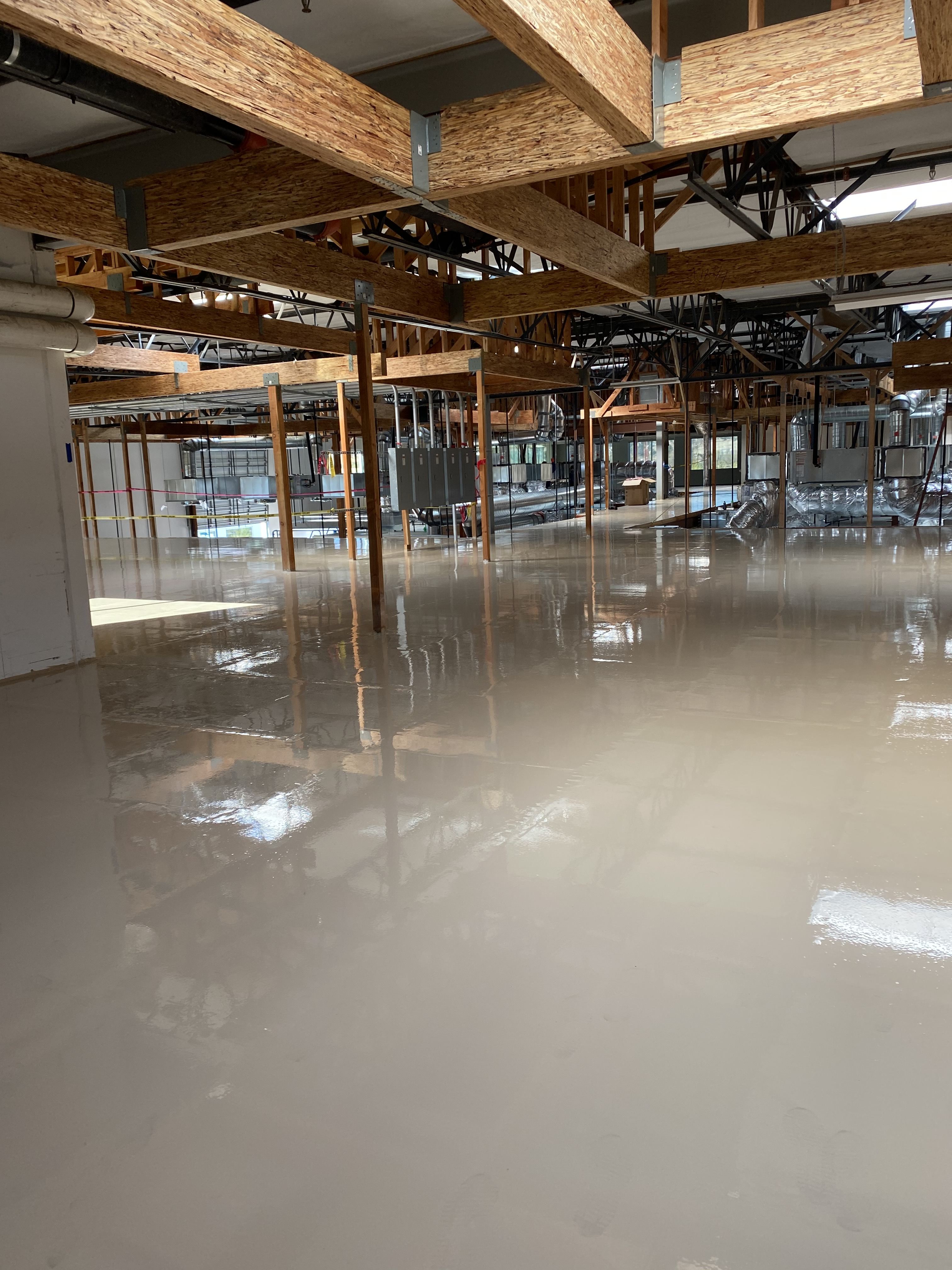
Mixing and applying the epoxy base coat required precision and speed I hadn’t fully anticipated. Epoxy has a limited working time once the two components are mixed, typically 30-45 minutes depending on temperature. I recruited two friends to help, dividing tasks: one person mixed, one poured, and one spread. We worked systematically across the 800 square foot basement, maintaining a wet edge to avoid lap marks. The white epoxy went on thicker than I expected, almost like spreading heavy cream. I learned to work quickly but carefully, using spiked shoes to walk on the wet epoxy while spreading it evenly with notched squeegees and rollers.
Adding decorative flakes transformed the plain white base into something with visual depth and texture. I chose a blend of white, light gray, and silver flakes that complement the base color while adding subtle interest. The flakes serve practical purposes too; they hide minor imperfections and provide a slight texture that improves traction. Broadcasting the flakes while the base coat was still wet required throwing them up into the air and letting them fall randomly onto the surface. This created even distribution and prevented clumping. My basement looked like a winter wonderland mid-process, with decorative flakes covering every surface, including us. The flakes embedded in the tacky epoxy create a speckled pattern I adore.
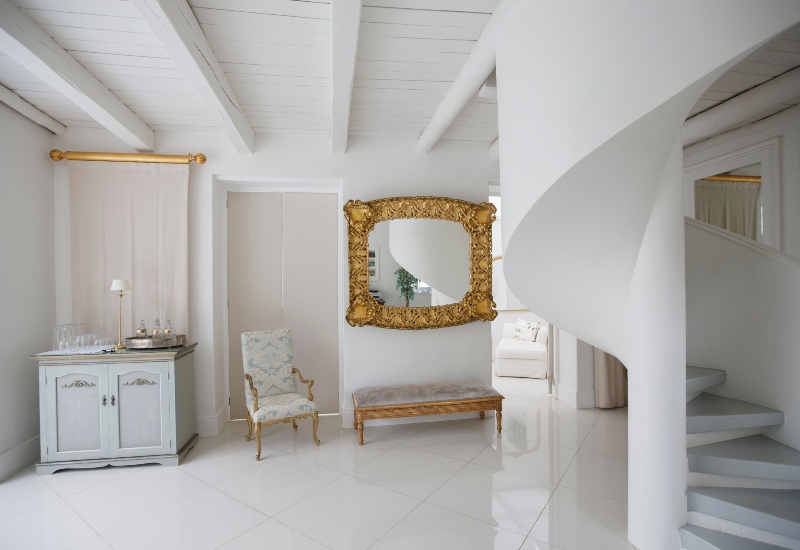
The clear topcoat sealed everything and created the high-gloss finish that makes my basement floor shine. I applied two coats of commercial-grade clear epoxy, allowing proper cure time between applications. The topcoat provides the real protection against scratches, chemicals, and wear while creating that wet-look gloss that reflects light beautifully. I learned that proper ventilation during curing is essential, both for fumes and to prevent surface contamination. I kept fans running and the dehumidifier going for the entire 72-hour cure period. The waiting was excruciating, but allowing full cure time ensures maximum durability and performance.
Living with white epoxy floors has been surprisingly easy and endlessly satisfying. The brightness they bring to my basement exceeded my expectations. The white surface reflects light from my fixtures so effectively that I’ve actually removed some lights because the space is plenty bright with fewer. The high-gloss finish makes the entire basement feel clean and modern. Contrary to warnings, maintenance is simple; I sweep regularly and damp mop weekly with pH-neutral cleaner. Spills wipe up instantly without staining. The smooth surface means dust and dirt have nowhere to hide, making cleaning faster and more effective than any previous basement flooring I’ve had.

The practical benefits extend beyond aesthetics. The seamless epoxy surface creates a moisture barrier that helps prevent water vapor transmission from the concrete, improving my basement’s overall humidity control. The chemical-resistant coating handles everything I throw at it, from spilled laundry detergent to dropped paint during projects. The durability is impressive; after two years of heavy use, including furniture moving and equipment storage, the floor shows no wear, scratches, or yellowing. The investment in quality materials and proper installation has paid dividends in daily usability and long-term performance.
My white epoxy basement floor has fundamentally changed how I use the space. What was once a dark storage area avoided by everyone is now our favorite hangout spot. We’ve added a home gym, craft area, and entertainment zone, all made possible by the bright, clean foundation the white floors provide. Friends who questioned my color choice now ask for my contractor recommendations and application tips. The transformation proves that sometimes the bold choice, the one that seems impractical or unconventional, turns out to be exactly what a space needs to reach its full potential.

Don’t white epoxy floors show dirt and require constant cleaning?
This was my biggest concern, but reality proved the opposite. The sealed, non-porous surface means dirt sits on top rather than embedding. A quick sweep removes most debris, and weekly damp mopping keeps floors pristine. I find white floors actually show less dirt than medium gray concrete does because the high gloss reflects rather than absorbs light. Pet hair and dust are visible, but they wipe away instantly. The key is quality epoxy with a proper topcoat, creating a smooth, cleanable surface.
How much did your white epoxy basement floor cost for materials and installation?
My 800-square-foot DIY project cost approximately $2,400 in materials. Commercial-grade epoxy ran $600 for base coat and $400 for topcoat. Decorative flakes cost $150, concrete prep materials and crack filler were $300, equipment rentals for grinder and tools totaled $400, and various supplies added $550. Professional installation quotes ranged from $5-8 per square foot, so DIY saved $4,000-6,400 in labor. Quality materials are expensive but crucial for durability and longevity in basement environments.

Can epoxy flooring handle basement moisture issues?
Proper moisture testing and preparation are essential before applying epoxy. I tested my basement using calcium chloride moisture test kits and found elevated moisture levels. I applied moisture-barrier primer before the epoxy to prevent adhesion failure. Quality epoxy creates an excellent moisture vapor barrier once cured, but it won’t solve active water intrusion problems. Address any drainage or seepage issues before installation. My basement’s humidity control improved significantly after installation, but existing moisture problems require separate solutions.
How difficult is DIY epoxy installation for someone with limited experience?
The difficulty is moderate with proper preparation and research. I watched dozens of tutorial videos and read the manufacturer’s instructions thoroughly. The most challenging aspects are concrete prep and working within epoxy’s limited pot life. I recommend starting with a small area, like a laundry room, to practice the technique before tackling the entire basement. Having helpers is crucial for larger spaces. Mistakes are expensive to fix, so invest time in preparation and planning. Consider hiring professionals if you’re not comfortable with detailed surface prep.
Will the white epoxy yellow over time, especially in basements with minimal natural light?
Quality epoxy with UV inhibitors resists yellowing significantly better than older formulations. My basement has minimal natural light, and after two years, the floor remains bright white without yellowing. I specifically chose epoxy rated for color stability. Lower-quality products may yellow, particularly if exposed to certain chemicals or if improperly mixed. The topcoat quality matters too; cheap topcoats yellow faster than commercial-grade products. Investing in quality materials prevents yellowing issues that plague bargain epoxy systems.
What’s the best way to maintain white epoxy floors long-term?
Maintenance is remarkably simple. I sweep or vacuum every few days to prevent grit from potentially scratching the finish. Weekly damp mopping with pH-neutral cleaner keeps floors spotless. I avoid harsh chemicals and abrasive cleaners that could dull the finish. For stubborn spots, warm water and mild dish soap work perfectly. Entry mats reduce tracked-in dirt. I periodically apply floor wax designed for epoxy to maintain the high-gloss shine, though this is optional. The sealed surface resists staining beautifully.

Related Posts: